The Last Days?
Most people realise that we are living in a time when the signs of the times are increasingly coming to our attention. Jesus warned us in Mark 13:4–8 about things that would happen, including wars and rumours of wars, earthquakes and famines. When we look at the world around us, we also see natural disasters such as raging fires, floods and tsunamis, as well as rapid technological development, an increase in knowledge, the growth of global systems and efforts towards greater worldwide cooperation.
We see Israel constantly at the centre of international discussion, threats of war, the spread of serious diseases, increasing moral confusion, the breakdown of families, rebellion against authority and open blasphemy against God. Yet Jesus did not warn us only about these things. He also explicitly warned us: “Take heed that no one deceives you” (Matthew 24:4). He said that many would come in His name and deceive people (Matthew 24:5), and that false prophets would arise and deceive many (Matthew 24:11).
If we are indeed living in the last days, as many believe, where are these false prophets and teachers? How will we recognise them? And is it possible that they are not necessarily found outside the church, but rather within religious circles, where people would not expect to find them?
The Great Falling Away
There must first be a great falling away before the Lord comes to take His bride (2 Thessalonians 2:3). We should therefore not necessarily expect a worldwide revival, growth and blessings, but rather an increasing spiritual deception and a falling away from the truth.
Everyone is slowly but surely joining hands with the harlot of Revelation, with her influence and her ungodly system (Revelation 18:3–4). The Word of God warns us to come out of her, so that we do not share in her sins and come under her judgements with her. These are prophecies that we must take seriously, for the prophetic word is not merely the thoughts of men, but the Word given through the Holy Spirit (2 Peter 1:19–21).
This present world is heading towards the judgement of God (Isaiah 13:7–9), and no man will be able to turn God’s judgement away when the appointed time comes. If you are not delivered from the sinful ways of this world now, whether you are a Christian or even a teacher, no religious position will be able to save you from God’s judgement (1 John 2:15–17; Isaiah 24:2–3).
We must be delivered from this present evil world; we cannot change the world’s ungodliness into a godly system by human methods. Christ Himself gave Himself for our sins to deliver us from this present evil world (Galatians 1:4).
Jesus said in the parable of the ten virgins that they all became drowsy and fell asleep while the bridegroom delayed (Matthew 25:5). In my understanding of this prophecy, this is a serious warning that the bridal community can also fall spiritually asleep before the Bridegroom comes. Not everyone who expects to meet Him will necessarily be ready when He comes.
Again and again, God called His people to repentance through His prophets, including Isaiah, Jeremiah, Ezekiel, Daniel and Hosea. The message was always that they had to leave their wrong ways and return to the Lord. God does not seek merely religious offerings, praise and prayers while people persist in disobedience and unrighteousness. In Isaiah 1:13–20, the Lord declares that He is weary of the offerings and religious gatherings of a people whose hands are stained with blood. He calls them to cleanse themselves, stop doing evil, learn to do good and repent of their wrong ways.
The message is clear: God does not seek merely outward religious forms. He calls His people to true repentance, obedience and a life that agrees with His Word.
The Church of Laodicea – The Church of the Last Days
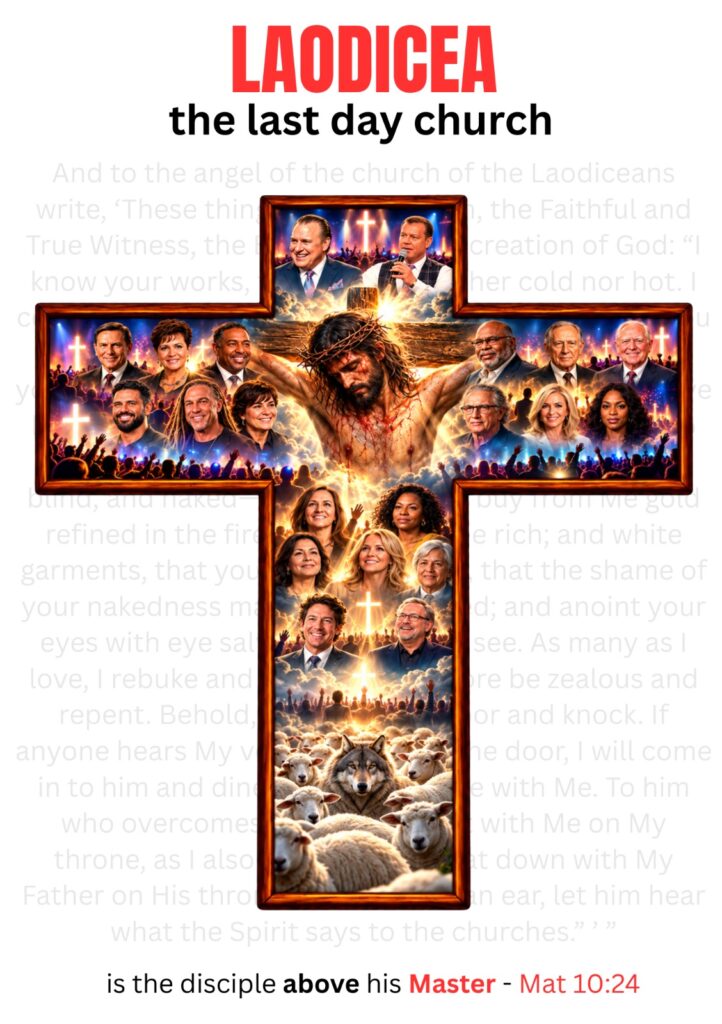
In Revelation 2–3, we read about the seven churches to which Jesus addressed letters. I also understand these seven churches as a prophetic picture of seven phases through which the church on earth would pass, from Jesus’ ascension into heaven until His return to come and take His bride. The final phase is represented by the church of Laodicea.
The name Laodicea is often associated with the concepts of people and judgement or justice. This is significant when we look at the condition of this church. In Revelation 3:14–22, we read that Jesus stands outside and knocks. He admonishes this church to repent, because she has become rich and believes that she lacks nothing. Yet she does not know that she is wretched, miserable, poor, blind and naked.
Jesus advises this church to buy from Him gold refined by fire, to put on white garments so that her nakedness will not be exposed, and to use eye salve so that she may see. He warns her that she is lukewarm: neither cold nor hot. Therefore, He says that He will spit her out of His mouth. Yet there is still a call to repentance, for the Lord rebukes and disciplines those whom He loves. He stands at the door and knocks. He promises that He will eat with the one who overcomes, and that the overcomer will sit with Him on His throne.
The warning ends with the words: “He who has an ear, let him hear what the Spirit says to the churches.” (Revelation 3:14–22).
When we look at the church today, I believe that we are seeing the condition of Laodicea becoming increasingly evident. Many churches have become materially and organisationally prosperous, but outward success is not necessarily proof of spiritual health. Church discipline and accountability are often neglected, while sin is sometimes made acceptable under the banner of personal rights and tolerance. Greed, self-exaltation and worldly management systems are being given a place in the church. Peter warns that there will be false teachers who, in their greed, exploit people with fabricated words (2 Peter 2:1–3).
Christian pop music and emotionally driven performances are sometimes used to entertain people and create an atmosphere in which everyone feels good. Messages are presented in such a way that people are encouraged and motivated, but are not necessarily confronted with their sin. When sin is addressed, the messenger is sometimes accused of being judgemental. Yet Scripture teaches us that spiritual things must be discerned (1 Corinthians 2:15), and that we must test everything against the Word of God.
Scripture also warns seriously against sexual sins and declares that unrepentant people who persist in such sins will not inherit the kingdom of God (1 Corinthians 6:9–10). Yet we must remember that Paul says in the same passage that some believers were once like this, but were washed, sanctified and justified (verse 11). The Gospel therefore does not give permission to persist in sin, but calls people to repentance and a changed life.
The issue of women teaching and exercising authority in the congregation must likewise be judged according to Scripture. From my understanding of 1 Corinthians 14:33–35, God’s order in the congregation is not something we can change according to our own preferences. We must take all of Scripture into account and not bend God’s Word to fit the prevailing culture.
A comfortable religious atmosphere has developed in which people hear: Come as you are; Jesus is love; Jesus wants to bless you. But where is the call to repentance, sanctification, obedience and the fear of the Lord? Paul warns against people who teach a different doctrine and regard godliness as a means of gain (1 Timothy 6:3–5). The love of Christ must never be used to silence the truth about sin and repentance.
The fear of the Lord, which is a foundation of true wisdom, has in many religious circles given way to a man-centred gospel. Uplifting courses, motivational talks and programmes to strengthen people’s self-esteem have sometimes taken the place of the preaching of the whole counsel of God. People are taught to be successful, positive and self-confident, but where is the call to deny self, take up the cross and follow Jesus?
The church often wants to bind and cast out the devil, win the world for Jesus and make the world a better place to live in. But while so much attention is given to programmes, experiences, success and worldly goals, the most important matters are sometimes neglected: the preaching of the true Gospel, the call to repentance, the sanctification of the believer and the expectation of the Lord’s return.
The tragic picture of Laodicea is that she believes she is rich and lacks nothing, while she does not realise how spiritually poor she has become. Jesus stands outside and knocks. The question is not how many people gather in the church, how many programmes are offered or how much money is collected. The question is: Is Jesus truly the Head of this church, and is His Word still being obeyed?
Wolves in Sheep’s Clothing
The false teachers and prophets come like wolves in sheep’s clothing (Matthew 7:15). They do not necessarily appear openly as enemies of Christianity, but often appear as respected religious leaders who exert great influence over millions of people. Their messages are widely circulated, their books are sold and their ministries grow, while some acquire great wealth and prestige. The house of the Lord becomes a house of trade (John 2:13–16). Remember, everything can be done under the banner of Christianity!
We have forgotten that the devil disguises himself as an angel of light, and that his servants also disguise themselves as servants of righteousness (2 Corinthians 11:14–15). Paul warns us that people can preach another Jesus, offer another gospel and that those who hear them can receive another spirit (2 Corinthians 11:4). Therefore, we must be vigilant. Not everything that sounds Christian is necessarily the true Gospel of Jesus Christ.
In the modern church, messages are increasingly being heard in which faith is linked to material prosperity, personal success and financial reward. The emphasis shifts from repentance, self-denial and obedience to God towards the acquisition of earthly wealth and a better life. But Jesus warns us: “Take heed and beware of covetousness” (Luke 12:15). The Gospel is not a means by which people can acquire wealth.
There are also teachers who question the uniqueness of Jesus Christ and the truth of the Gospel, while others proclaim that there are different ways to God. Yet Jesus clearly said: “I am the way, the truth, and the life: no man cometh unto the Father, but by me” (John 14:6). We cannot equate other religious paths with the Gospel of Jesus Christ without seriously questioning His own words.
Others preach a gospel in which human potential, self-confidence and success become the centre. People are encouraged to discover the champion within themselves, pursue their dreams and expect God’s favour, while the biblical call to repentance, sanctification and self-denial is pushed into the background. Jesus, however, warned that the world would hate His followers because they do not belong to the world (John 15:18–19).
We also see how the authority of the Bible is being questioned. The virgin birth, the deity of Christ and His bodily resurrection are sometimes reinterpreted or denied to make them fit modern thinking. But Paul warns seriously against any other gospel, even if it were preached by someone of great standing (Galatians 1:6–9). The apostles did not have the right to change the Gospel according to the needs of their time, and neither do we have that right.
Scripture warns that in the last days there will be people who fall away from the faith and follow deceptive teachings (1 Timothy 4:1–2). When the truth of God’s Word is systematically questioned, when the person and work of Jesus Christ are watered down, and when human thinking is elevated above the authority of Scripture, we must seriously consider the direction in which the church is moving.
The danger is that Christians gradually become accustomed to these changes. What was once regarded as incompatible with the Bible becomes acceptable because it is preached by well-known teachers, large ministries or academically respected voices. In this way, people are being prepared to accept a different understanding of God, Jesus Christ and the Gospel.
Paul warns in 2 Thessalonians 2:3–12 against the falling away and the deception that accompanies it. This warning should not make us curious about the identity of the coming Antichrist at the expense of our own spiritual vigilance. Rather, it should urge us to love the truth and not be swept away by deception.
The wolves in sheep’s clothing are dangerous precisely because they are not always easy to recognise. They can use the language of Christianity, quote the Bible and gather large crowds. But the standard is not popularity, education, miracles, financial success or the size of a ministry. The standard is the Word of God.
Therefore, we must be watchful, discerning and test everything. We must not accept a message as true merely because it comes from a pulpit or is preached by a well-known Christian. We must return to the Word, preserve the true Gospel and faithfully await the Lord.
He who has an ear, let him hear!
What Is Sound Doctrine?
What is the sound doctrine that Paul warns us about — the teaching that people will not want to endure in the last days? (2 Timothy 4:1–5). It is the same old, ordinary message of the cross! Paul warns us that the message of the cross is foolishness to those who are perishing, but to us who are being saved, it is the power of God (1 Corinthians 1:18).
What is this message of the cross? You must first come to the realisation that you are lost and that you cannot save yourself. You must realise that there is only One who can save you: the Son of God, JESUS CHRIST.
You must repent, confess your sins and turn away from them (Proverbs 28:13). When you turn to God in sincere faith and repentance, you must be born again (John 3:3). Everything must become new! (2 Corinthians 5:17).
You must allow the Holy Spirit to reveal the Word of God to you, to convict you of sin and to guide you into the truth (John 16:8–14). After your repentance, you must be baptised, as the Lord commanded us (Mark 16:16). You must allow yourself to be led by the Spirit of God (Romans 8:14), because God wants to refine and purify your faith like gold refined by fire (1 Peter 1:7).
The Lord disciplines those whom He loves (Proverbs 3:11–12). He rebukes and disciplines those whom He loves, and therefore He calls the church of Laodicea to repentance (Revelation 3:19). His discipline is not a sign that He has rejected you, but a call to return to Him.
You must turn your back on the values of the world and dedicate your life to God (Romans 12:1–2). You must fight against sin and the desires of the flesh, and clothe yourself with the Lord Jesus Christ (Romans 13:11–14).
You must lay up treasures in heaven and not bind your heart to earthly wealth and possessions (Matthew 6:19–21). This earthly existence is temporary; we look forward to the eternal dwelling that God has prepared for us (2 Corinthians 5:1). You must fear God and keep His commandments, for this is the whole duty of man (Ecclesiastes 12:13).
Trust in the Lord with all your heart and allow Him to direct your paths (Proverbs 3:5–6). Your life must bear witness that you no longer live for yourself, but that Christ lives in you (Galatians 2:20).
It is all or nothing! It is a costly price to deny yourself and put Christ first, but the promises of God are precious. Let us cleanse ourselves from everything that defiles our body and spirit, bringing our sanctification to completion in the fear of God (2 Corinthians 7:1).
Jesus warns us to enter through the narrow door, because many will try to enter but will not succeed (Luke 13:24). Have you tried to preserve your life, or have you lost it for the sake of Christ? (Matthew 10:39). There is no safe middle ground in which we can confess Christ while still deliberately clinging to the world and to sin.
If we have died with Him, we will also live with Him (2 Timothy 2:11).
Beware that you are not deceived! Return to sound doctrine, examine yourself in the light of the Word of God, and make sure that your faith does not consist merely of outward religion, but of a new life in Jesus Christ.
The Deception Is So Subtle
If you have not yet repented, have not yet been born again, or have not yet died to self, then you stand a good chance — even if you are a Christian or a teacher — of being swept along and deceived by the Laodicean church of the last days (2 Peter 2:1–3). The danger lies precisely in the fact that deception is not always easy to recognise. It can come under the banner of Christianity and be proclaimed by people who appear religious, but whose message leads people away from the truth.
Centuries before the first coming of Jesus, God warned His people through the prophets because they honoured Him with their lips, but their hearts were far from Him. Isaiah 6:9–13 describes the spiritual blindness and the judgement that would come upon the people. Imagine that you had travelled through Israel in those days. You would have seen synagogues, priests and religious practices. Everything might have appeared outwardly normal and religious, but the spiritual condition of the people was not what God desired. Ezekiel 8 describes how abominable idolatry was taking place even in the temple. Religion was present, but disobedience and idolatry were hidden behind the religious appearance.
I understand the church of Laodicea as a prophetic picture of the final phase of church history. When we read Revelation 3:14–22, we see a church that believes she is rich and lacks nothing, but does not realise how wretched, poor, blind and naked she really is. Jesus stands at the door and knocks. He calls this church to repentance (Revelation 3:19–20).
The world is being prepared for the events that Scripture connects with the last days and the great tribulation. When we look at the church today, it can sometimes appear as though a great revival is taking place. Churches are growing, people are flocking to gatherings, and religious activities are increasing. But beware! Large numbers and outward growth are not necessarily proof of a true spiritual revival. The wolves are here, sometimes right under our noses (Titus 1:10–11).
Make absolutely sure that your own life bears witness to sound doctrine. Do not rely merely on your church membership, your religious experience or the words of a teacher. Examine yourself in the light of the Word of God. Make sure that you walk in the truth and that your life bears the fruit of true repentance and being born again.
The deception is so subtle that you can think you are on the right path while, in reality, you are moving away from the truth. Beware that you are not deceived!
Jesus Comes to Take His Bride
Through the picture of the traditional Jewish wedding, we can see a beautiful illustration of the relationship between Jesus Christ and His bride, and of the true Gospel.
It begins with the bridegroom choosing his bride. Jesus reminded His disciples that He had chosen them (John 15:16). The initiative for our salvation comes from Him. He loved us first and paid the full price for our redemption (1 Corinthians 6:20).
Thereafter, the marriage terms are made known through the Ketubah. We can compare this with the New Testament and the new covenant established through Jesus Christ (Hebrews 12:24). The bride must know what her Bridegroom expects of her. She must read the Word, understand it and live according to it. Have you read your contract? Do you understand what Jesus expects of His bride, or do you blindly trust a doctrine that someone else presents to you? All Scripture is given by inspiration of God and is profitable for doctrine, for reproof, for correction and for instruction in righteousness (2 Timothy 3:14–17).
The wedding picture also reminds us of cleansing and preparation, when the woman cleanses herself by immersing herself in the Mikveh bath. When we are united with Christ through faith, we are buried with Him through baptism into death, so that we may walk in newness of life (Colossians 2:12). Baptism portrays our identification with His death and resurrection. It is not merely an outward religious act, but a testimony of the new life to which God calls us. Hebrews 6:1–6 warns us seriously not to fall away from Christ after we have come to know the truth.
In the wedding picture, a cup is used to confirm the commitment. This reminds us of the meaning of the Lord’s Supper, through which we proclaim our fellowship in the blood and body of Christ (1 Corinthians 10:16). Do you understand the sacred meaning of the Lord’s Supper and what it reminds you of concerning the price Jesus paid for you?
In the wedding picture, the bride receives gifts. In the same way, Christ has also given gifts to His church. The Holy Spirit has been given to us as the guarantee of what God has prepared for us, and through the Spirit, believers receive different gifts to serve one another (1 Corinthians 12:4; compare Ephesians 1:13–14). We do not receive these gifts to exalt ourselves, but to build up the body of Christ.
Thereafter, the bridegroom departs for his father’s house to prepare a place for his bride. Jesus said that He was going to His Father’s house to prepare a place for His followers, and that He would come again to take them to Himself (John 14:2–3).
No one knows the day or the hour of His coming; Jesus Himself said that the Father alone knows (Matthew 24:36). Yet He gave signs for His followers to watch for, and He commanded them to look up when these things begin to happen, because their redemption is drawing near (Luke 21:28).
The bride must now live by faith and hold fast to the promise that her Bridegroom will come. In the traditional wedding picture, there could be a waiting period before the bridegroom returned. In the same way, we wait for the promise of Jesus’ second coming. We do not know when He will come, but we must be ready.
She still had to go to the marketplace to trade and continue with her daily life. But her life had changed: she now belonged to someone else. In the same way, the world must be able to see that we belong to Jesus Christ. Jesus said that His disciples are not of the world, just as He is not of the world (John 15:19). We cannot confess the Lord while deliberately living according to the values of the world.
The bride had to prepare herself for the day when the bridegroom would come. In the same way, we are called to be holy and blameless and to look forward to the coming of the Lord (2 Peter 3:14). Everyone who has this hope in Christ purifies himself, just as He is pure (1 John 3:3).
On the appointed day, the bridegroom would come to take his bride. Jesus compares His coming with the arrival of the bridegroom in the parable of the ten virgins (Matthew 25:1–13). The virgins had to be ready when the bridegroom came. The wise virgins took oil with them along with their lamps, but the foolish ones did not have enough.
When the cry rings out and the Bridegroom comes, it will be too late to begin preparing. The oil in this parable reminds us of the necessity of spiritual readiness. We cannot wait until the last moment to begin seeking the Lord earnestly. The grace of God teaches us to deny ungodliness and worldly lusts, and to live soberly, righteously and godly in this present world, while looking for the blessed hope (Titus 2:11–13).
It is a lifelong path of repentance, self-denial, overcoming sin and taking up our cross. You cannot bind your heart to the world and at the same time expect to be ready for the Bridegroom. It is a full-time way of life. It is all or nothing!
If the people around you do not know that you belong to Christ, they will continue to judge you according to the values of the world. Your words alone are not enough; your life must bear witness to the One to whom you belong. It is not always easy to live set apart from the values of the world when everyone around you is going in a different direction. But when we sincerely love the Lord, our love for Him must become visible in our obedience and in our expectation of His coming.
Child of God, make absolutely sure that the world knows where you stand today! Live as someone who belongs to Jesus Christ. Keep your life pure, remain faithful to His Word and be ready to meet Him.
Hear — He is on His way!